Cleaning Out Your Home Before a Move? Here's Where Your Hazardous Items Actually Need to Go
Every time I help a family prepare to sell, the same thing happens. We start clearing out the garage, the shed, the cabinet under the kitchen sink — and out come the things nobody quite knows what to do with. Half-used cans of paint. Old motor oil. A box of dead batteries. Fluorescent tubes. Weed killer from three summers ago.
Here's what most people don't realize: in California, you cannot legally throw these items in the trash, pour them down the drain, or leave them at the curb. And yet it happens all the time, simply because people don't know there's a better option right here in our county — one that's free, fast, and genuinely easy.
After more than 20 years living and working in this community, the local knowledge I share with clients goes well beyond home values. So let me tell you about a resource every Alameda County homeowner should know about.
Key Takeaways
- In California, it is illegal to put household hazardous waste in the trash, down the drain, or on the ground (According to StopWaste, the official Alameda County waste agency)
- Alameda County residents can drop off these items for free at four facilities — including one right here in Livermore — with no appointment needed
- The service covers paint, batteries, motor oil, electronics, garden chemicals, and much more
- This is one of the most overlooked steps in preparing a home for sale — and one of the easiest to get right
- A clean, properly cleared-out home shows better, photographs better, and signals care to buyers
What Counts as Household Hazardous Waste
This is the part that surprises people. "Hazardous" sounds dramatic, but it covers everyday items most of us have sitting in a garage or cabinet right now.
According to StopWaste, the official waste-reduction agency for Alameda County, household hazardous waste includes paint, solvents, and stains; batteries of all kinds; motor oil, antifreeze, and oil filters; fluorescent bulbs and tubes; garden chemicals like pesticides, herbicides, and fertilizers; and consumer electronics such as old computers, TVs, and phones.
If it can catch fire, react, or is toxic or corrosive — it generally doesn't belong in your regular trash.
The Resource Most Locals Don't Know About
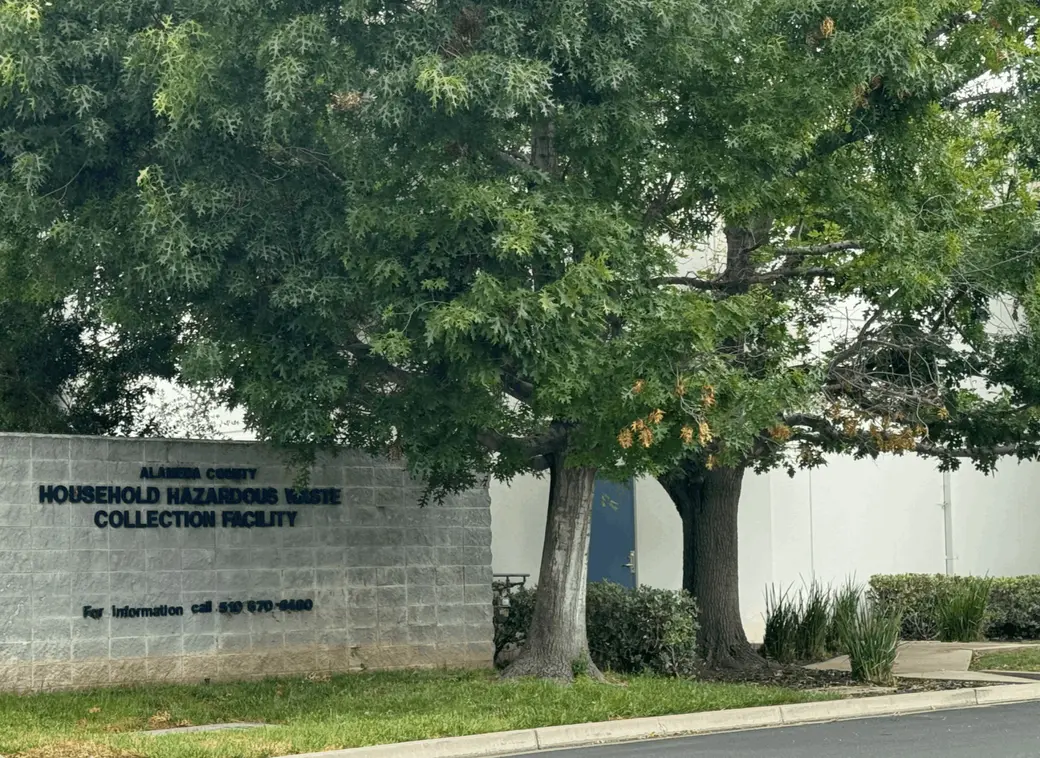
Here's the good news. Alameda County operates four Household Hazardous Waste facilities where residents can drop these items off completely free of charge — and one of them is right here in Livermore, at 5584 La Ribera Street.
According to StopWaste, the service requires no appointment. The process is genuinely simple: you place your items in sturdy, sealed containers in your trunk or cargo area, drive to whichever facility is most convenient, and stay in your car while staff unload everything for you.
A few practical details worth knowing, according to StopWaste:
- Bring valid ID showing your Alameda County address — a driver's license, recent utility bill, or rental or ownership agreement all work
- Container limits: each container should be no more than 5 gallons or 50 pounds, with a maximum of 125 pounds or 15 gallons total per visit
- Keep it sealed and leak-proof — containers must be sturdy and secure
- Stay in your vehicle — pull up, pop the trunk, and let staff handle the rest (it's California state law)
- Residents only — the waste must be transported by the household resident, not a hauler or third party
As of this writing, the Livermore facility is open Thursday and Friday from 9:00 AM to 2:30 PM, and Saturday from 9:00 AM to 4:00 PM. Because hours and holiday closures can change, I always recommend confirming the current schedule at StopWaste.org or by calling the county program at 800-606-6606 before you go.
Why This Matters When You're Selling
This isn't just a tidy public-service tip — it's a real part of preparing a home that shows well.
When buyers tour a home, they notice everything, even when they can't articulate it. A garage stacked with old paint cans and mystery chemicals reads as clutter and deferred maintenance. A clean, cleared-out garage reads as a home that's been cared for. That impression carries weight, and it starts forming the moment a buyer walks in.
Beyond presentation, clearing hazardous items properly is simply part of handing over a home the right way. You don't want to leave it for the next owner, and you certainly don't want it sitting in a trash can where it's both illegal and unsafe. Getting it handled early — before listing photos, before the first showing — is one of those small, unglamorous steps that makes the whole process smoother.
A Few Things the Facilities Can't Take
According to StopWaste, the HHW facilities cannot accept medications, large appliances, construction materials, explosives, or business waste. There are separate options for several of these:
- Medications can be dropped at over 80 pharmacy kiosks across Alameda County
- Motor oil and filters are also accepted at many certified collection centers and auto parts stores
- Large appliances typically go through your city's bulky-item pickup program
When in doubt, StopWaste.org has a full, searchable list of what goes where.
Q&A
Do I really need to use a special facility? Can't I just throw small amounts away?
No — and this is the most common misunderstanding I hear. According to StopWaste, it is illegal in California to dispose of household hazardous waste in the trash, down the drain, or on the ground, regardless of the amount. The good news is that the free drop-off makes doing it correctly easier than trying to sneak it into the garbage.
Is the drop-off actually free?
Yes, for Alameda County residents. According to StopWaste, the drop-off service is free — you just need to show ID confirming your county address. Note that the service is for residents, not businesses.
I'm getting ready to list my home. When should I handle this?
Early — ideally before listing photos and showings. Clearing out the garage and storage areas is one of the first things I walk through with sellers, and hazardous items are part of that. It's a small task that quietly improves how your home presents.
What if I'm not sure whether something qualifies?
When in doubt, check StopWaste.org or call 800-606-6606. It's always better to confirm than to guess and risk putting something hazardous in the trash.
If you're thinking about buying or selling and want a partner who knows this community inside and out — from home values to the local resources that make a move easier — get in touch. With over 20 years of living and working here, I'm here to help you make the right move, not just the next one.
Categories
- All Blogs (25)
- Bay Area Housing Market (6)
- Home Buying Tips (4)
- Home Maintenance & Seller Tips (1)
- Livermore Community Resources (1)
- Livermore Neighborhoods (1)
- Livermore Real Estate (2)
- Local Market Insights (5)
- Market Insights (5)
- Market Trends & Home Design (1)
- Real Estate Tips (5)
- Real Estate Tips & Seller Advice (1)
- Selling Your Home (1)
- Tri-Valley & Bay Area Guides (1)
- Tri-Valley Real Estate (2)
Recent Posts