What Lawrence Livermore Lab Actually Does to Home Values (And Why It Matters to Buyers)
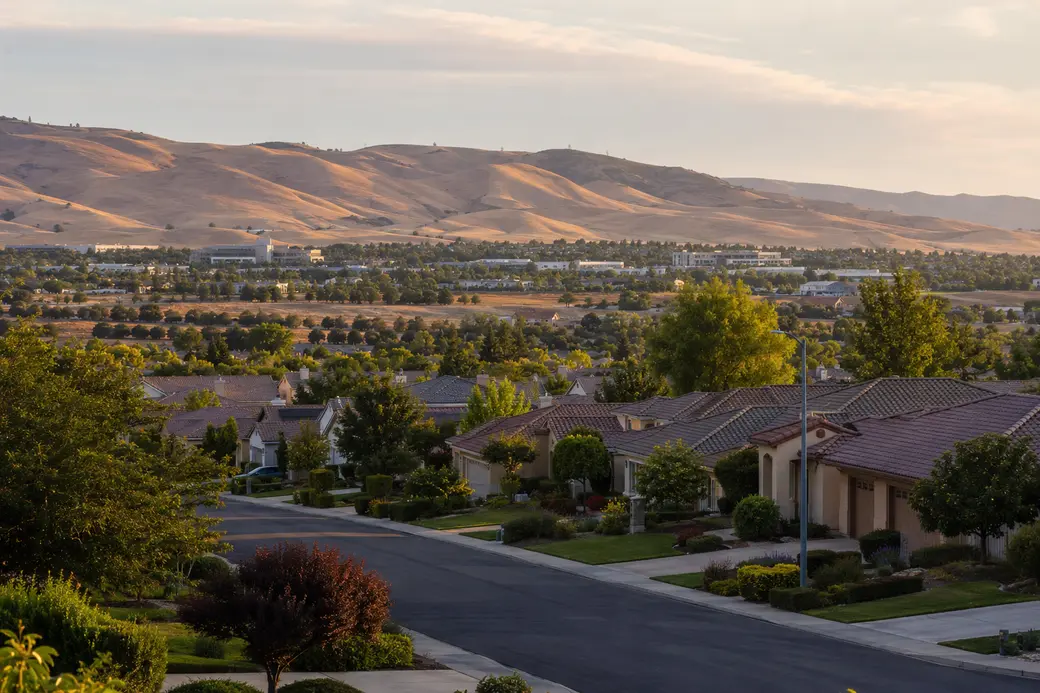
When people ask me what makes Livermore's real estate market so resilient — through rate spikes, economic uncertainty, and everything else the last few years have brought — I always give the same answer: it's not just the wine country or the schools or the downtown. It's the labs.
Lawrence Livermore National Laboratory and Sandia National Laboratories are two of the most significant scientific institutions in the United States. And they happen to sit right here in our backyard. After twenty years of helping buyers and sellers in this area and calling Livermore home for over thirty, I can tell you that the presence of these labs shapes our housing market in ways most buyers never think to ask about — but absolutely should.
Key Takeaways
- Lawrence Livermore National Laboratory employs 9,340 people as of FY2025, supported by a total annual budget exceeding $3.7 billion, according to llnl.gov. Sandia National Laboratories maintains hundreds of scientists and engineers at its Livermore site, according to sandia.gov.
- These are not tech company jobs that can be eliminated in a restructuring. They are federal government-backed positions tied directly to this geography — which creates a consistent, creditworthy buyer pool that doesn't disappear when the broader economy shifts.
- The median household income in Livermore is $160,775, and 52.3% of residents hold a bachelor's degree or higher, according to the U.S. Census Bureau. Both figures reflect the concentration of highly educated, well-compensated professionals this market attracts.
- According to the U.S. Census Bureau, 90% of Livermore residents lived in the same home the year before — one of the clearest indicators of a stable, committed community you'll find in any Bay Area city.
- Understanding who is buying in this market — and why — changes how you approach both your offer strategy and your long-term view of the investment.
The Two Labs That Quietly Define This Market
Lawrence Livermore National Laboratory was founded in 1952 and is operated by the Department of Energy. According to llnl.gov, in FY2025 LLNL employed 9,340 people plus 417 contractors, with a budget of $2.83 billion from the National Nuclear Security Administration and additional DOE and partnership funding that brings the total to over $3.7 billion for the year.
That scale is worth pausing on. LLNL is not a regional employer. It is one of the nation's premier science and engineering institutions, with a workforce that includes physicists, engineers, computer scientists, and researchers across a wide range of disciplines. The lab sits at 7000 East Avenue — and the neighborhoods along that East Avenue corridor, including the Jensen area with its established mid-century homes, have long attracted professionals who want a straightforward commute to campus.
Sandia National Laboratories, while headquartered in Albuquerque, maintains a California site in Livermore with hundreds of scientists and engineers focused on engineering research in support of national defense, according to sandia.gov.
Together, these two institutions represent thousands of full-time, well-compensated professionals who live, buy homes, and put down roots in Livermore and the surrounding Tri-Valley.
What Kind of Buyers Does This Create — and Why It Matters
Lab employees tend to be long-term, committed buyers. Many hold security clearances that tie them to this specific location professionally. They are not cycling through cities every two years the way startup employees sometimes do. They are looking for a home to grow into, a neighborhood to invest in, and stability that matches the stability of their career.
According to levels.fyi, research scientists and engineers at LLNL earn salaries that typically range from $137,000 to over $200,000 annually. In 2025, LLNL adopted a regional compensation framework specifically designed to reflect the high cost of living here, according to llnl.gov — meaning those salaries are actively calibrated to the Livermore market.
What I consistently notice after twenty years in this market is that buyers with lab connections ask different questions than most. They want to understand lot size, long-term neighborhood stability, school assignments. They are almost never buying speculatively. That profile — patient, financially grounded, and genuinely intending to stay — is exactly the kind of demand that supports a healthy, stable market over time.
There is also a dual-income dimension that often goes unrecognized. The Altamont Corridor Express, known as the ACE train, operates two stations in Livermore — South Vasco Road and Railroad Avenue — with direct service to San Jose, carrying approximately 2,900 commuters per weekday, according to ACE Rail. Many Livermore households include one partner at the lab and another commuting south to Silicon Valley by train. That combination of incomes, in a city where the median household income is $160,775 according to the U.S. Census Bureau, produces buyers with real purchasing power and real reasons to stay.
The Stability Factor
One thing I have watched over two decades is how Livermore weathers downturns differently than many other Bay Area communities. Part of that is lifestyle and location. But a significant part is the employment base underneath the market.
Federal funding for national security research does not fluctuate with venture capital sentiment or tech company earnings cycles. Even in recessions, the labs operate, hire, and retain people. That creates what I think of as a floor of demand — a consistent pool of buyers whose ability to purchase does not depend on a bull market or a particular sector being in favor.
The U.S. Census Bureau data confirms what I observe on the ground: 72% of Livermore housing units are owner-occupied, and 90% of residents lived in the same home the prior year. For context, that residential stability figure is significantly higher than you find in more transient Bay Area markets. People who move to Livermore tend to stay in Livermore — and that consistent, long-term ownership is a meaningful driver of neighborhood stability and sustained property values.
What This Means If You're Buying Here
If you are considering a home in Livermore, understanding the labs is genuinely useful — not just as local color, but as part of how you evaluate the long-term picture.
A market with a stable, income-qualified buyer pool anchored by federal employment is a different market than one driven primarily by tech or finance. In my experience, when you eventually sell — whether in five years or twenty — your buyer pool will very likely include scientists, engineers, and researchers who are professionally tied to this area. That is a reliable foundation for resale value that does not depend on one industry remaining hot.
It also reframes what "affordable relative to the Bay Area" means in Livermore. Less expensive compared to Palo Alto or San Jose is true — but that relative affordability is not the only thing holding values here. According to the U.S. Census Bureau, the median value of owner-occupied homes in Livermore is $1,105,600. There is a real economic foundation underneath that number, and knowing what drives it changes how you think about the investment you are making.
Frequently Asked Questions
Does the lab employment base actually affect which neighborhoods hold value best?
It is a factor, yes. The neighborhoods closest to the LLNL campus along the East Avenue corridor have historically drawn consistent interest from lab employees. Established areas like Jensen — where many of the mid-century homes have been well-maintained and updated over the years — tend to attract buyers who are staying for the long term. That said, Livermore is compact enough that commute proximity is not the only driver. South Livermore, with its larger lots and vineyard views, attracts a different buyer profile entirely. What I have seen matter most, regardless of neighborhood, is overall home quality and the stability that comes from long-term owner-occupancy.
Are lab employees a significant share of buyers I'd be competing with?
They are one part of the buyer pool, but not the only part. The Tri-Valley attracts buyers from across the Bay Area, including professionals relocating from higher-cost markets like the Peninsula and South Bay. What the lab presence does is ensure that a meaningful portion of that buyer pool is consistently present and income-qualified regardless of what is happening in the broader tech market — which is a meaningfully different dynamic than what you find in markets entirely dependent on private-sector hiring cycles.
Does LLNL being a federal institution create any risk if government funding changes?
Lawrence Livermore National Laboratory has operated continuously since 1952 and is directly tied to the national security mission of the Department of Energy. Its core work — including the National Ignition Facility, which achieved fusion ignition in 2022, and ongoing stockpile stewardship research — is considered strategically essential and has maintained funding across administrations and economic cycles. That does not make any institution completely without risk, but LLNL's funding history is as stable as federal science funding gets.
I keep hearing that Livermore is "more affordable" than other Bay Area cities. Is that still true at current prices?
Relative to Pleasanton, San Ramon, and much of Silicon Valley, yes — Livermore's median sits meaningfully below those markets for comparable single-family homes. What I always want buyers to understand is that "more affordable" here still means a seven-figure purchase — the Census Bureau puts the median owner-occupied home value at $1,105,600. The value proposition is about what you get for the price: more square footage, more usable outdoor space, more practical layouts, and a buyer pool with genuinely stable long-term demand underneath it. That trade-off is real, and it is why I see serious, well-qualified buyers actively choosing Livermore rather than settling for it.
Curious About What This Market Looks Like at Your Price Point?
The lab presence, the buyer pool, the long-term demand picture — these are the things that rarely come up in a property search but matter considerably when you are making a decision at this price point.
If you are thinking about buying or selling in Livermore or the Tri-Valley, I would be glad to sit down and give you an honest picture of what the market actually looks like right now — based on what has actually traded recently, not on estimates. Reach out and let's start that conversation. I would be honored to help you navigate it.
Sources: Lawrence Livermore National Laboratory FY2025 By the Numbers (llnl.gov/about/by-the-numbers) · Sandia National Laboratories Facts & Figures (sandia.gov/about/facts-figures) · U.S. Census Bureau QuickFacts: Livermore city, California (census.gov) · LLNL Research Scientist Salary Data (levels.fyi) · Altamont Corridor Express ridership data (acerail.com)
Categories
- All Blogs (24)
- Bay Area Housing Market (6)
- Home Buying Tips (4)
- Home Maintenance & Seller Tips (1)
- Livermore Community Resources (1)
- Livermore Neighborhoods (1)
- Livermore Real Estate (2)
- Local Market Insights (5)
- Market Insights (5)
- Real Estate Tips (5)
- Real Estate Tips & Seller Advice (1)
- Selling Your Home (1)
- Tri-Valley & Bay Area Guides (1)
- Tri-Valley Real Estate (2)
Recent Posts