Why Your Home's Outdoor Space Can Make or Break a Summer Sale
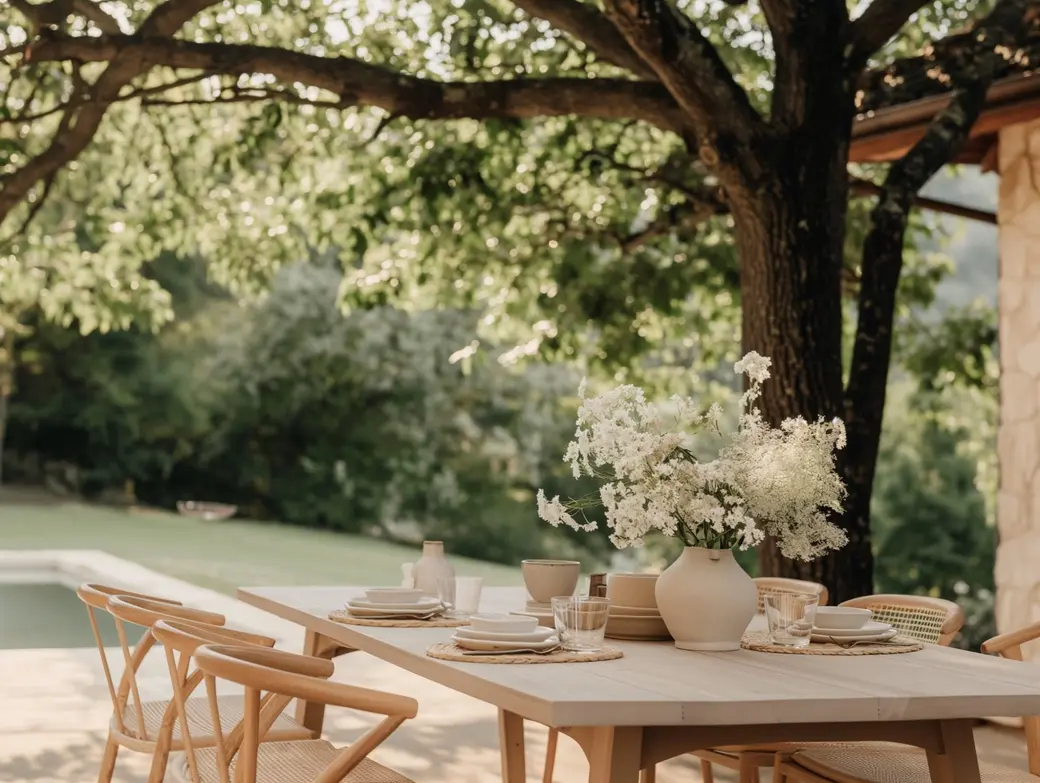
After twenty years of listing homes across Livermore, Pleasanton, Dublin, and San Ramon, I can tell you that outdoor spaces decide sales more often than sellers expect — in both directions.
The pattern I see repeatedly: a seller invests heavily in the interior, prices the home correctly, and then loses buyers at the moment they step outside. Not because the yard is broken. Because it tells no story. Buyers in this market are not just purchasing square footage — they are purchasing a version of their life. The outdoor space is where that vision either forms or collapses.
Key Takeaways
- Homes with strong curb appeal sell for an average of 7% more than comparable properties — rising to 10–11% in slower markets (phys.org, August 2025)
- 97% of NAR Realtors consider curb appeal important or very important in attracting buyers (NAR Remodeling Impact Report)
- Nearly half of buyers won't seriously consider a home that doesn't feel right from the outside (Better Homes and Gardens Real Estate, 2025)
- Refurbishing an existing patio consistently outperforms building new in ROI
- The most dangerous outdoor space for a seller is not the neglected one — it is the over-improved one that signals buyers they are paying for someone else's taste
Why Summer Makes This More Consequential
From May through October, the Tri-Valley doesn't get rain. The sky is consistently clear. A well-staged Livermore or Pleasanton backyard photographed in late afternoon in June creates listing images that simply do not exist the rest of the year. For most buyers today, those photographs are the first showing your home gets. Many decide whether to schedule an in-person visit based entirely on what they see on screen.
There is a second factor specific to this market: Tri-Valley summers run hot — regularly reaching the mid-to-upper 80s, with frequent spikes into the 90s and above. Buyers relocating from the Peninsula and South Bay feel this immediately. A backyard with no shade reads as uncomfortable. A covered seating area, a pergola, or a mature tree changes how a buyer experiences the space emotionally. In my experience, this distinction shifts buyer sentiment in ways that interior upgrades cannot compensate for.
Who Is Buying in the Tri-Valley Right Now — And What They Expect Outdoors
According to Redfin, Livermore homes sold after an average of 13 days on the market as of early 2026, with a median sale price of approximately $1.2 million. Pleasanton sits higher — median prices through 2025 and into 2026 ran in the mid-$1.5M to mid-$1.7M range, with well-priced, move-in-ready homes continuing to attract multiple offers.
The dominant buyer in this market is relocating from the Peninsula or South Bay. They have been living on a smaller lot for years and are coming to the Tri-Valley specifically for more space. When that outdoor space is well-presented, it confirms their decision. When it is neglected, it introduces doubt about whether they are making the right trade.
What changes across price points is the expectation. At $1.2M in Livermore, buyers want clean, functional, and low-maintenance. At $1.6M in Pleasanton, they expect the outdoor space to feel like a genuine extension of the home — some intentionality in the design, some architectural connection between inside and outside. Knowing which buyer you are selling to, and what they need to see when they walk outside, determines whether your preparation is targeted or wasted.
The Counterintuitive Thing About Outdoor Improvements
Most sellers assume more is better. In my experience, that assumption is often wrong.
The hardest outdoor spaces to sell around are not the neglected ones — those are a known problem with a clear solution. The harder problem is the over-improved outdoor space: one where a seller has expressed their specific taste elaborately in ways that work perfectly for them and read as inflexible to buyers.
An outdoor kitchen that cost $35,000 is not automatically an asset. Buyers with children may want that space back as lawn. Buyers who don't cook outdoors see maintenance, not value. Buyers at any price point may simply want the freedom to make the space their own.
The improvements that work most reliably across Tri-Valley price points are the ones that create a clear, flexible sense of possibility — a clean, simple patio with room to be used in multiple ways will outperform an elaborate outdoor room designed for one specific lifestyle, almost every time.
What the Research Shows on ROI
According to a 2025 study by phys.org, homes with strong curb appeal sell for an average of 7% more than comparable properties. On a $1.2M Livermore home, that is $84,000. On a $1.6M Pleasanton home, it is $112,000.
On specific improvements: NAR research shows patios can recover up to 95% of installation cost at resale and add approximately 8–10% to overall property value. More importantly, refurbishing an existing patio delivers returns approaching 500% of the repair cost, because the investment is a fraction of new construction. The same logic applies to decks.
Entry doors consistently deliver the highest ROI of almost any single pre-listing improvement, according to the 2025 Cost vs. Value Report from Remodeling Magazine, and frequently recoup more than they cost. This is one of the most overlooked investments sellers skip.
What to Do Before You List
Walk the property like a stranger. Stand at the curb. Walk to the front door. Stand in the center of the backyard. Ask what story the space tells. If it tells no story, that is the problem to solve.
Restore before you build. Nine times out of ten, the most effective outdoor preparation is restoring and staging what already exists — not building something new. Clean, pressure wash, repair, restage. New construction is almost never the best use of a pre-listing budget.
Stage it like a room. A seating arrangement, a side table, a few plants — these give buyers something to mentally move into. Blank outdoor space, no matter how large, reads as unfinished.
Plan six to eight weeks out. Landscaping takes time to look intentional after trimming or new planting. If you are considering listing this summer, that work should begin now.
Questions Sellers Ask Me
Should I build a new patio or deck before selling? Rarely. If you have an existing one in fair condition, repair and stage it. Restoration returns far more per dollar than new construction. If you have no hardscape at all and your price point is $1.4M or above, a simple, proportionate patio adds real value — but keep it restrained. The goal is to show buyers a space they can make their own.
How much should I spend? For most Tri-Valley sellers, focused preparation in the $1,000–$5,000 range delivers returns that exceed the spend. Priority order: clean and pressure wash everything, declutter completely, repair what is broken, fresh mulch, trim planting, paint the front door, stage simply.
I have a pool. Asset or liability? It depends on the buyer and the condition. In Livermore, where summers are long and hot, a well-maintained pool in a family neighborhood is generally an asset. At higher Pleasanton price points, it depends on what the buyer prioritizes. Position it honestly, make sure it is in excellent condition, and price accordingly.
When is it too late? It is never too late to clean, declutter, and stage — that can happen in days. What changes with lead time is not whether you can improve the space, but how many of those improvements have the chance to look settled and intentional rather than rushed.
Thinking About Selling?
If you are not sure whether your outdoor space is helping your sale or quietly working against it, that is exactly the conversation I'd love to have before you list. Reach out — I am happy to take a look together.Categories
- All Blogs (24)
- Bay Area Housing Market (6)
- Home Buying Tips (4)
- Home Maintenance & Seller Tips (1)
- Livermore Community Resources (1)
- Livermore Neighborhoods (1)
- Livermore Real Estate (2)
- Local Market Insights (5)
- Market Insights (5)
- Real Estate Tips (5)
- Real Estate Tips & Seller Advice (1)
- Selling Your Home (1)
- Tri-Valley & Bay Area Guides (1)
- Tri-Valley Real Estate (2)
Recent Posts